The world of travel today is greatly feeling the impact of affluent households. According to a new report from Visa Business and Economic Insights, this consumer segment is significantly influencing global travel trends, accounting for up to a quarter of all travel spending despite being a small percentage of the population. Their preferences — ranging from unique, immersive experiences to visiting nontraditional destinations — are driving demand and impacting which places rise in popularity worldwide. We sat down with Visa economist Richard Lung to uncover his insights on what’s shaping 2025 luxury travel trends.
Who are affluent travelers and how are they impacting the global travel industry?
Affluent consumers — households earning over $200,000 USD per year — are having an outsized impact on global travel trends despite broader economic slowdowns and affordability challenges. Although they represent only a small portion of the population, they account for as much as one in every four dollars spent on travel globally.
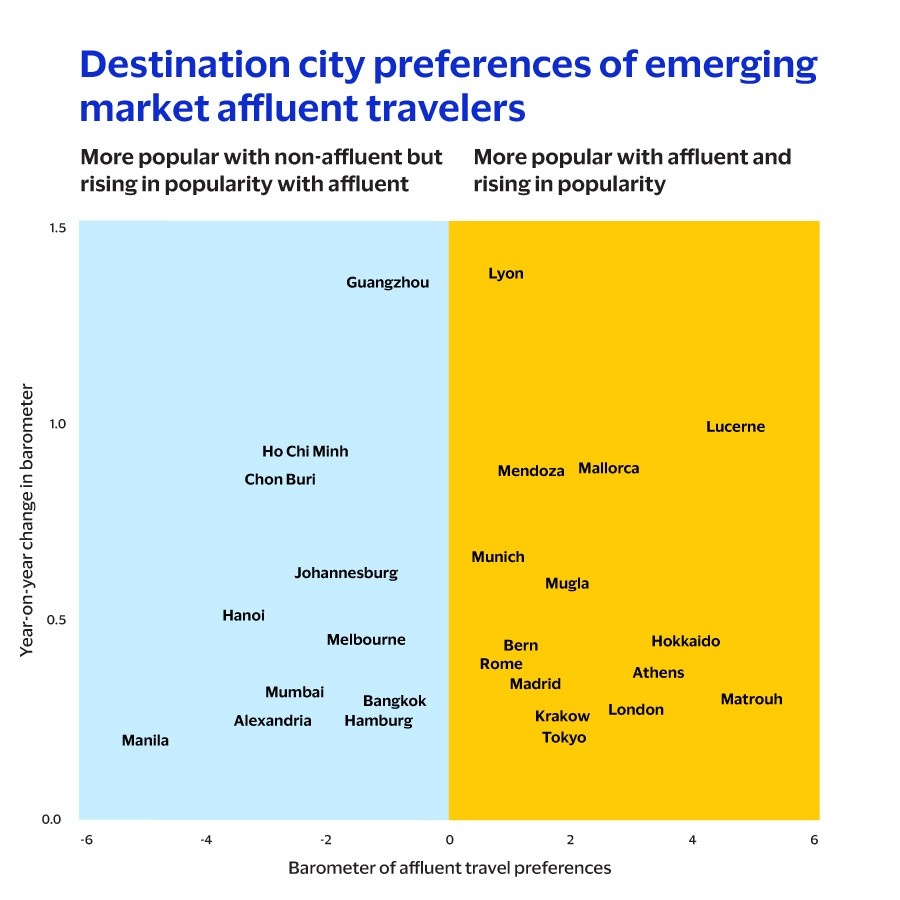
Their preferences are shifting toward unique, immersive experiences and lesser-known destinations, with places like Hokkaido in Japan, Mendoza in Argentina and Mersa Matruh in Egypt emerging as sought-after hotspots. This group’s considerable spending power not only fuels airlines, hotels and luxury retail, but also plays a key role in determining which destinations rise in popularity worldwide.
Which destinations are becoming most popular?
Affluent travelers are redrawing the global travel map. While iconic cities like London, Paris and Tokyo remain in demand, the fastest-growing destinations are often far from the typical tourist crowds. These rising hotspots tend to share a few key traits:
- Authenticity: Affluent travelers are seeking more genuine cultural experiences — think local cuisine, artisan experiences and meaningful interactions with communities.
- Approachability: Overcrowded capitals and increasing visa hurdles are influencing travelers to explore more accessible alternatives, particularly across the Asia Pacific and the Middle East and North Africa (MENA) regions.
- Proximity: As wealth grows in Asia, the Middle East and Latin America, more affluent travelers are opting for regional escapes alongside international adventures.
The trend is clear in our data: Travelers from emerging markets are gravitating toward destinations with distinctive cultural appeal, natural beauty and elevated experiences — reshaping what “luxury travel” looks like around the world.
Emerging market affluent travelers are increasingly favoring emerging economies
How does Visa identify new travel trends?
We analyze depersonalized, aggregated transaction data from VisaNet, combined with insights from the Visa International Travel database, to track the volume, spending patterns and destinations of affluent travelers worldwide.
By analyzing real credit and debit card spending alongside international travel estimates, we can identify not just where these travelers are going, but also how much they’re spending, how their preferences are evolving, and which regions and specific destinations are experiencing the fastest growth. This data-driven approach gives us a clear, timely view of how the world’s most influential travelers are shaping the future of global tourism.
What do these findings mean for travel-related businesses?
Travel-related businesses need to adapt quickly — or risk being left behind. Our research shows that focusing on five key strategies can help attract and retain affluent travelers: personalization, authenticity, convenience, data-driven insights and targeting emerging markets.
Personalization is now the baseline, with bespoke itineraries, exclusive access and VIP treatment expected both online and in person. Authenticity — through local culture, cuisine and meaningful connections — remains a top priority. Seamless convenience, from booking to arrival and beyond, is essential. By leveraging data analytics, businesses can anticipate evolving preferences and customize offerings in real time. And with affluent consumer bases growing rapidly in Asia Pacific, the Middle East and Latin America, targeting these regions is critical, as they are driving a significant share of global travel growth.
Bottom line: Affluent travelers are resilient, adventurous and shaping the future of global tourism. Businesses that anticipate their evolving preferences — and innovate to meet them — will win more bookings and long-term loyalty.